

Product and UX designer, 14 years, most of it on enterprise systems where a confusing screen costs real money. I ship production front-end and build accessibility in from the first wireframe, so what gets released matches what got designed.
Four working prototypes on this site. Click through them, they are not screenshots.
See the case studies Start with the accessibility build →
-
Experience: 14+ Years
-
Focus: Design systems, accessibility, front-end
-
Location: Charlotte, NC · open to remote
-
LinkedIn: View Profile (opens in a new tab)
-
Status: Open to senior product design roles
I spent eight years designing internal tools at the largest Coca-Cola bottler in the United States, a company serving 60 million consumers across 14 states and Washington, D.C. Enterprise work teaches a specific discipline: the people using your interface did not choose it, cannot avoid it, and will use it every day for years. It has to be right.
What separates my work is that I do not stop at handoff. I write semantic HTML and CSS, prototype in the browser when a static mockup cannot carry the intent, and implement WCAG and WAI-ARIA requirements rather than annotating them for someone else. The Innov8 prototype on this site is five working screens with keyboard navigation I verified using automated tests. That fluency is why engineering teams trust the specs I hand them.
I also use AI-powered tools throughout my process: Claude for AI-assisted prototyping in code, Figma for rapid prototyping, and Adobe for fast content and asset creation.

-
01 I work upstream with PMs and engineers
The most expensive design problems get discovered late. I get into requirements before the pixels.
I work upstream with PMs and engineers
On Authorization Tracker I partnered with a business analyst before any design started, defining which roles needed to see what and how three separate workflow tracks should be separated. That work is why the rebuild replaced the spreadsheet instead of becoming a nicer front end on the same broken process.
I bring implementation risk into the conversation early, at requirements and sprint planning rather than at design review, because I can read the codebase and see what a given design will actually cost to build.
-
02 I prototype in code, not just in Figma
When a static mockup cannot carry the intent, I build the real thing in the browser and hand engineers something they can inspect.
I prototype in code, not just in Figma
The Innov8 PSA Forecast prototype on this site is five working HTML screens with WAI-ARIA tabs, roving tabindex and arrow-key navigation, verified with automated keyboard tests. Club Coke and Authorization Tracker are clickable too.
This changes the handoff conversation. Instead of a spec document describing intended behaviour, engineers get working reference markup. Ambiguity drops, and so does the number of things that get built differently than they were designed.
-
03 I build accessibility in, not on
Retrofitting WCAG compliance costs several times what designing for it does. I integrate it at the component level from day one.
I build accessibility in, not on
I work to WCAG 2.1 AA: contrast and focus order in the design files, semantic structure and ARIA in the component library, and accessibility criteria in review checklists before code is written.
Accessible products end up being better products generally. Cleaner hierarchy, clearer language, more resilient layouts. The audit result is the byproduct, not the goal.
-
04 I build systems and the governance to keep them alive
Most design systems fail on adoption, not on design. The hard part is organizational, not visual.
I build systems and the governance to keep them alive
At Coca-Cola Consolidated I founded and chaired the Design Council, a cross-functional governance body with representation from 5+ business units, and authored its charter as a versioned organizational document written for executive and IT leadership.
The component library and Digital Brand Guide gave the standards something concrete to point at. The council gave them a forum with authority. Neither works without the other.
Five case studies, each on its own page. Four include something you can click through right now: three working prototypes and a live component library.
-
Live prototype
Authorization Tracker 2.0
Replaced a shared Excel workbook used by 200 people across 10 teams with a governed authorization platform. Includes a live prototype you can click through.
-
Live prototype
Club Coke
Multi-tier approval routing and legal contract execution for an enterprise iPad app used by field sales reps. Includes a live prototype.
-
Design system · Live library
Coca-Cola Consolidated Design System
Founded and chaired a Design Council spanning 5+ business units, and built the Digital Brand Guide component library it governed. Includes the live library.
-
Live prototype · Accessibility
Innov8 PSA Forecast
A self-directed five-screen prototype built with WAI-ARIA tabs, roving tabindex and full keyboard navigation, verified with automated tests.
-
3 live sites
Coca-Cola Consolidated Web Properties
The corporate site plus the Red Classic and ERS subsidiary sites, each restructured around the audiences it actually serves.


-
 UI/UX Authorization Tracker 2.0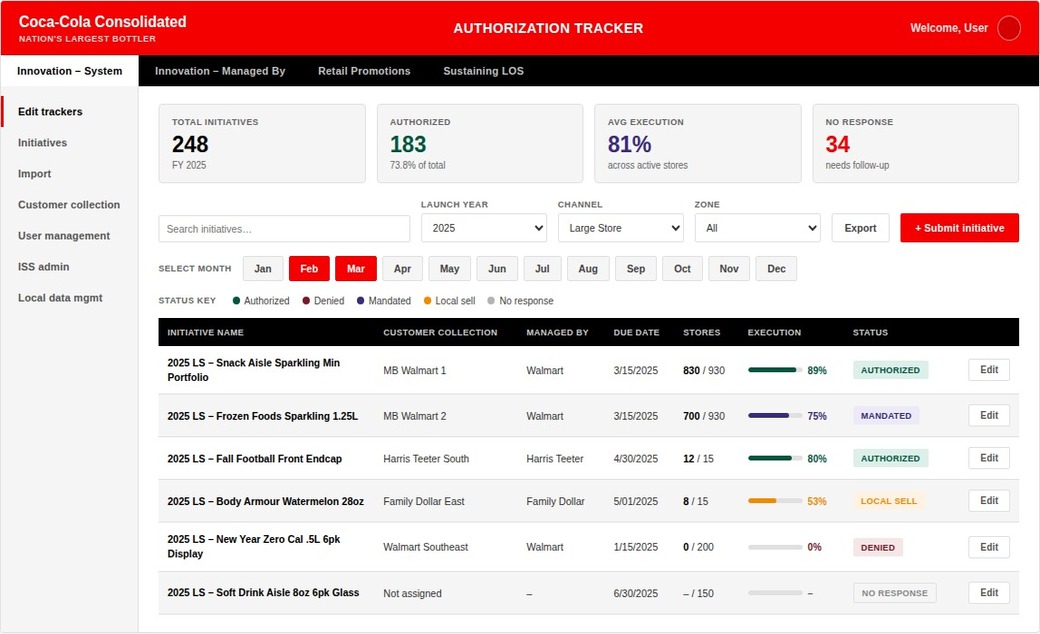
Project Info
Authorization Tracker 2.0
An enterprise authorization tracking platform that replaced a single shared Excel workbook used by roughly 200 users across 10 manager-led teams. The redesigned UI gave each role a permissioned view and sped up approval and authorization workflows that had previously relied on manually updating one spreadsheet.
- Client Coca-Cola Consolidated
- Role UI/UX Designer
- Category UI/UX Design
-
UI/UX Club Coke
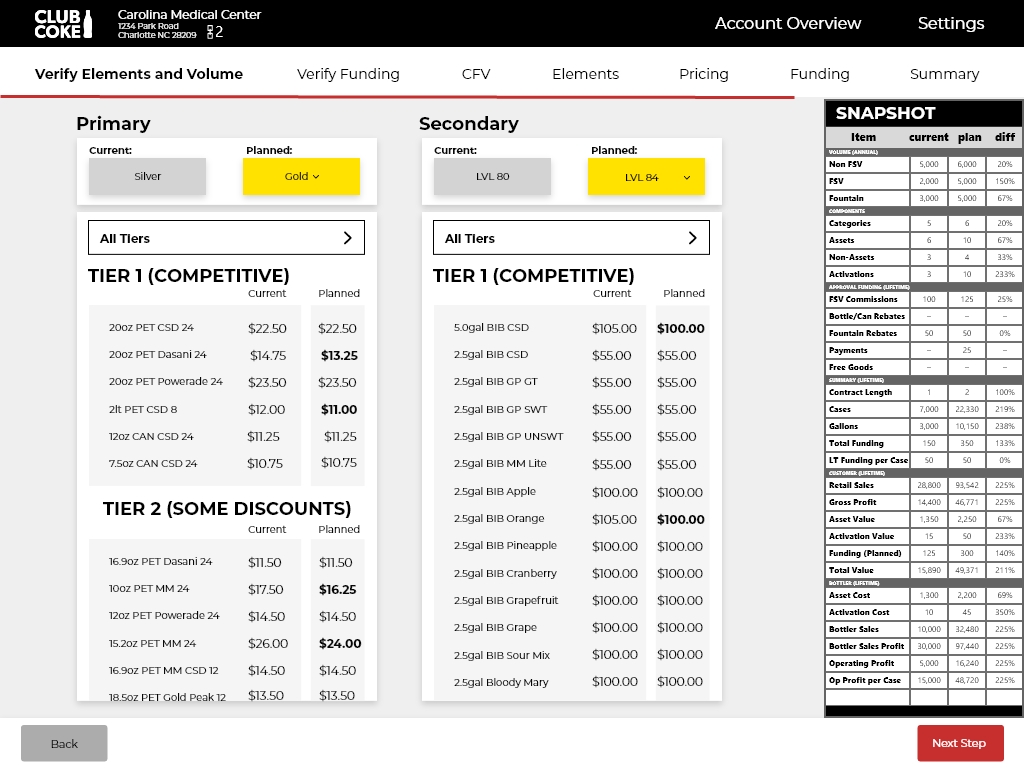
Project Info
Club Coke
An enterprise iPad application used by Coca-Cola Consolidated field representatives to manage commercial plans and contracts for retail accounts. Scope covered the multi-tier approval workflow and the full legal contract execution suite, including signatures and equipment linking.
- Client Coca-Cola Consolidated
- Role UI/UX Designer
- Category UI/UX Design
-
UI/UX Activity Execution Manager
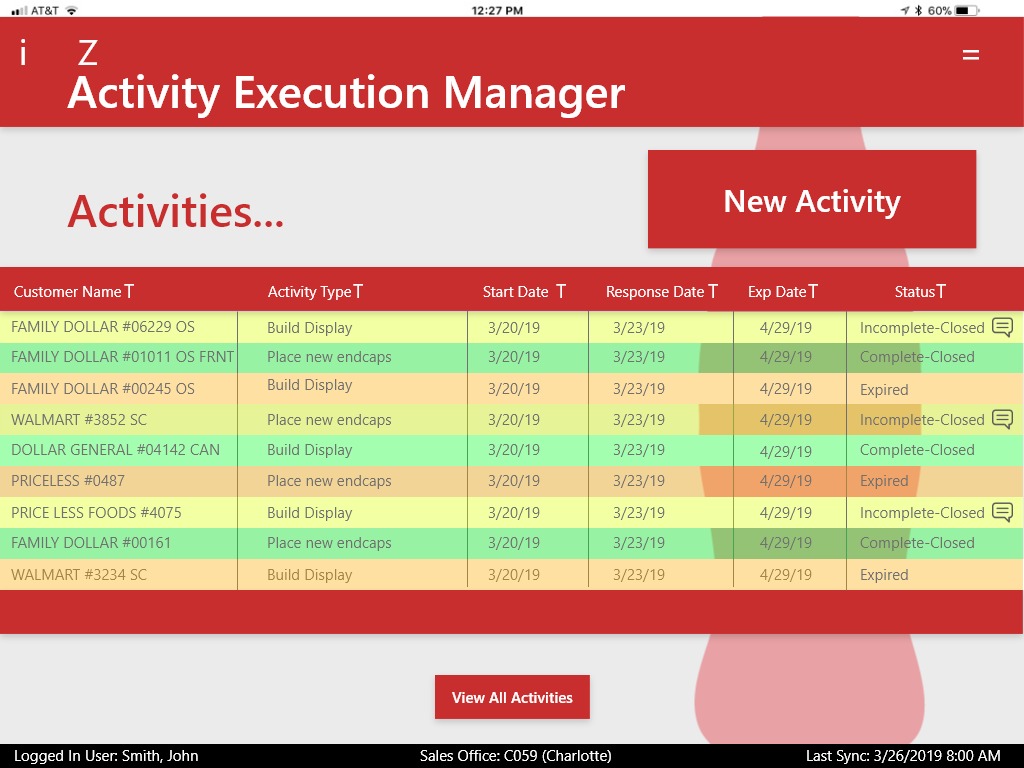
Project Info
Activity Execution Manager
The Challenge
In-store merchandising and promotional execution ran on a shared spreadsheet. Someone assigned a task, and after that there was no dependable way to tell who owned it, whether it was done, or who still had to sign off. It stopped scaling as activity volume grew.The Approach
Credentials decide the interface. A maker gets assignment and approval tools; a doer in the field gets only what is needed to mark work complete. Holding those two experiences apart inside one platform was the whole design problem.The Outcome
Assignment, execution, and approval each got their own interface, replacing a single shared sheet that treated every role the same.Selected Screens
Screens from both sides of the maker and doer model: the task creator's assignment view, and the field executor's matching, more restricted view of the same task.Maker: Activities List The maker's home screen: create, assign, and track in one place.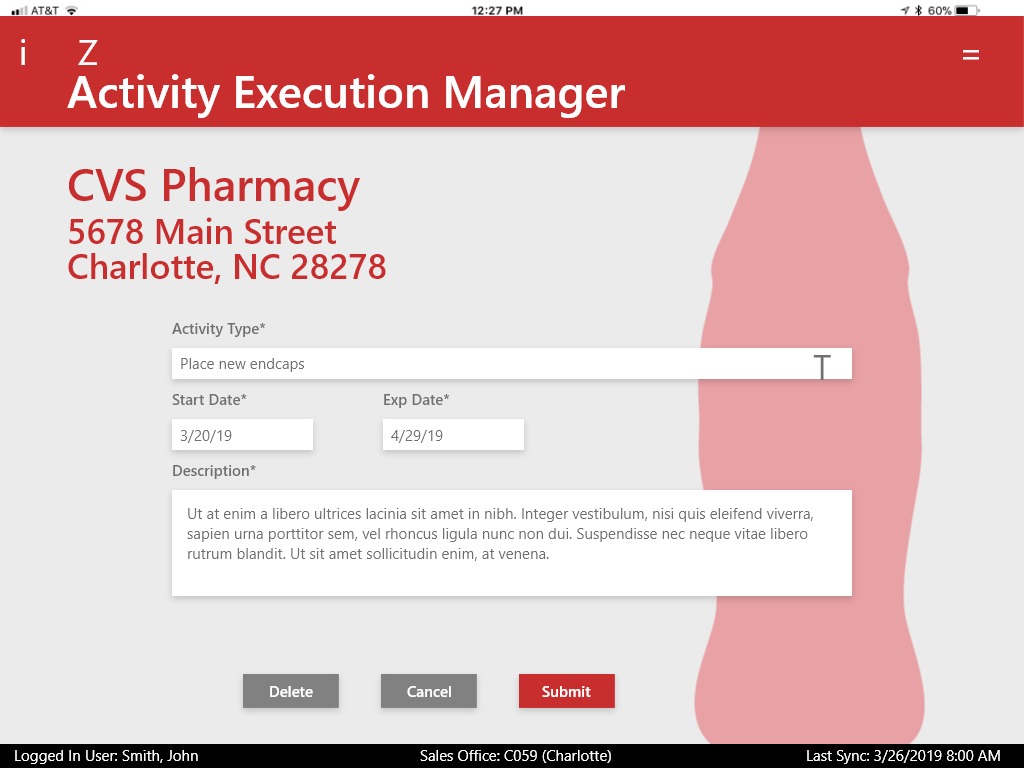 Maker: Create Activity The assignment form, available only to the maker role.
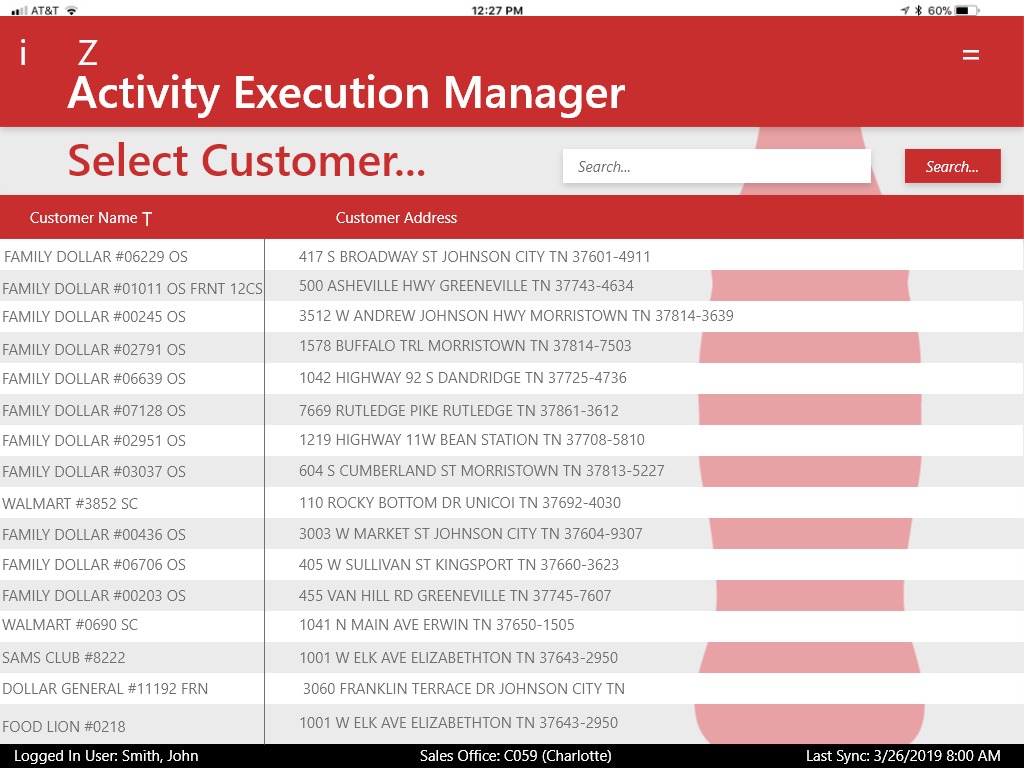 Maker: Select Customer Searchable account directory for routing work to the right store.
 Doer: Login The doer's entry point, designed for a phone.
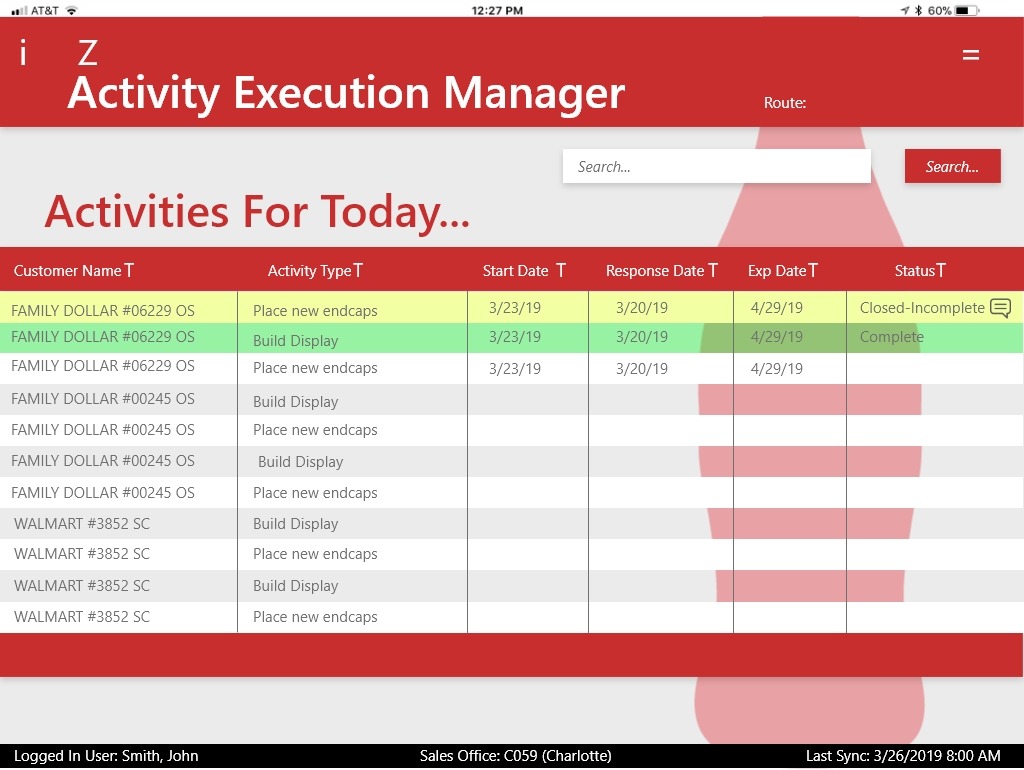 Doer: Activities For Today The same activity list concept as the maker's view, but with no creation action, since this role only executes assigned tasks.
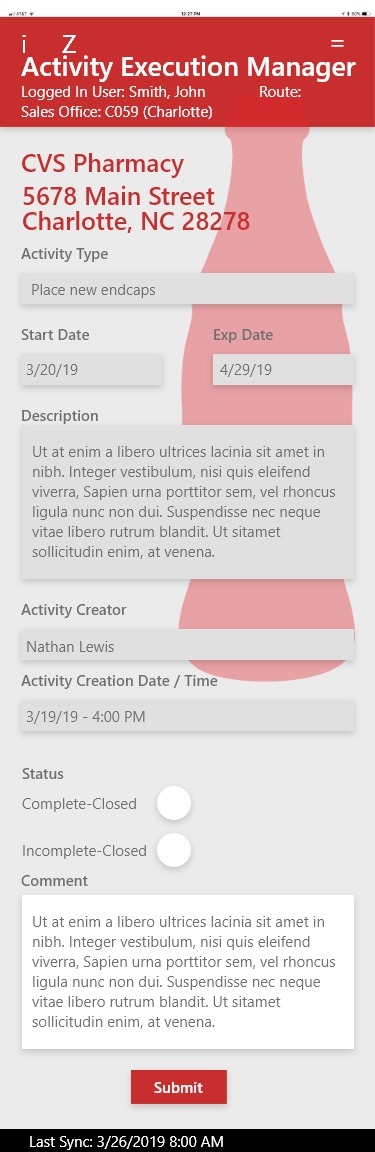 Doer: Selected Activity The clearest contrast in the app: account and task details are read-only, while completion status and a comment field are the only inputs this role has.
 App Icon & Brand Mark The AEM monogram, built into a Coca-Cola bottle silhouette, used as the app's login screen and icon.
- Client Coca-Cola Consolidated
- Role UI/UX Designer
- Category UI/UX Design
-
Websites, Branding Coke To Go Website
Project Info
Coke To Go Website
The Challenge
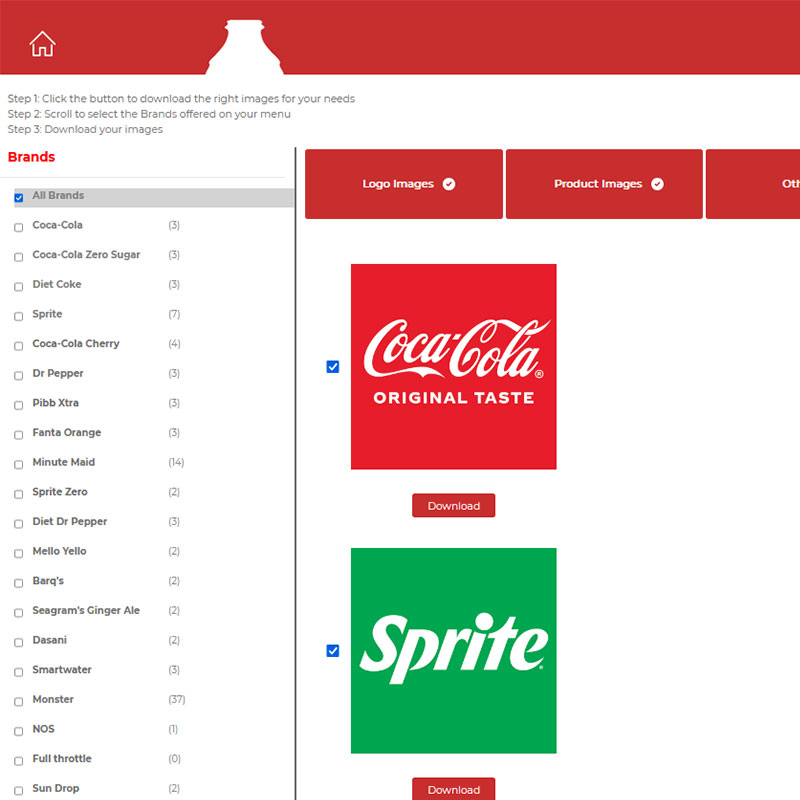
Small independent retailers, the "mom and pop" stores that carry Coca-Cola products, don't have in-house design teams or marketing budgets, but they still need menus, signage, and storefront materials that look professionally on-brand. Without an easy way to access real Coca-Cola brand assets, these businesses were left either using low-quality or outdated logos and graphics, or skipping branded materials altogether.The Approach
I designed and built Coke To Go as a self-service site where small business owners can find and download approved Coca-Cola brand assets directly, logos, product imagery, and design elements suited for menus, signage, and websites, without needing to request them through a sales rep or wait on a design team. The interface was kept simple and low-friction by design, since the audience is a business owner fitting this in between running their store, not a design professional.The Outcome
Coke To Go gives small retailers a direct, self-service path to professionally produced Coca-Cola brand assets they wouldn't otherwise have the design resources to source or recreate themselves, helping their menus and storefronts look as polished as a much larger operation's.- Client Coca-Cola Consolidated
- Role UI/UX Designer
- Category Web Development, Web Design, Branding
-
Websites, Branding Coca-Cola Consolidated Corporate Website
Project Info
Coca-Cola Consolidated Corporate Website
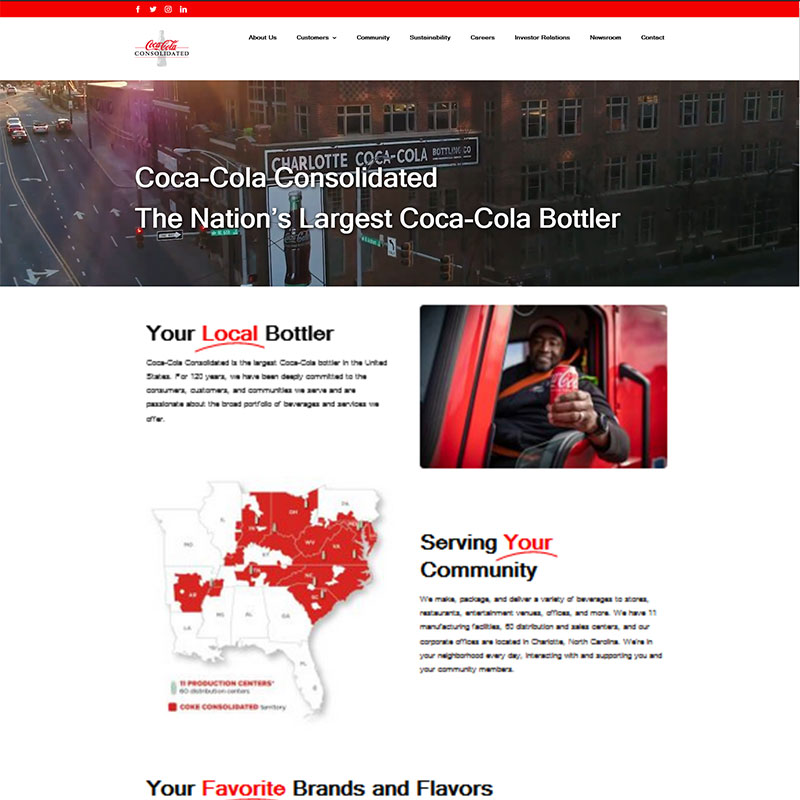
A redesign of the corporate website for the largest Coca-Cola bottler in the United States, serving investors, prospective employees, community partners, and press. The work included rebuilding the information architecture and visual system, and integrating a vendor-managed, security-restricted Investor Relations section behind a consistent navigation shell.
- Stakeholders Corporate Communications Team
- Role UI/UX Designer
- Timeline 3-6 Months
- Category Brand Refresh, Web Design, Branding
-
Websites, Branding Red Classic Website
Project Info
Red Classic Website
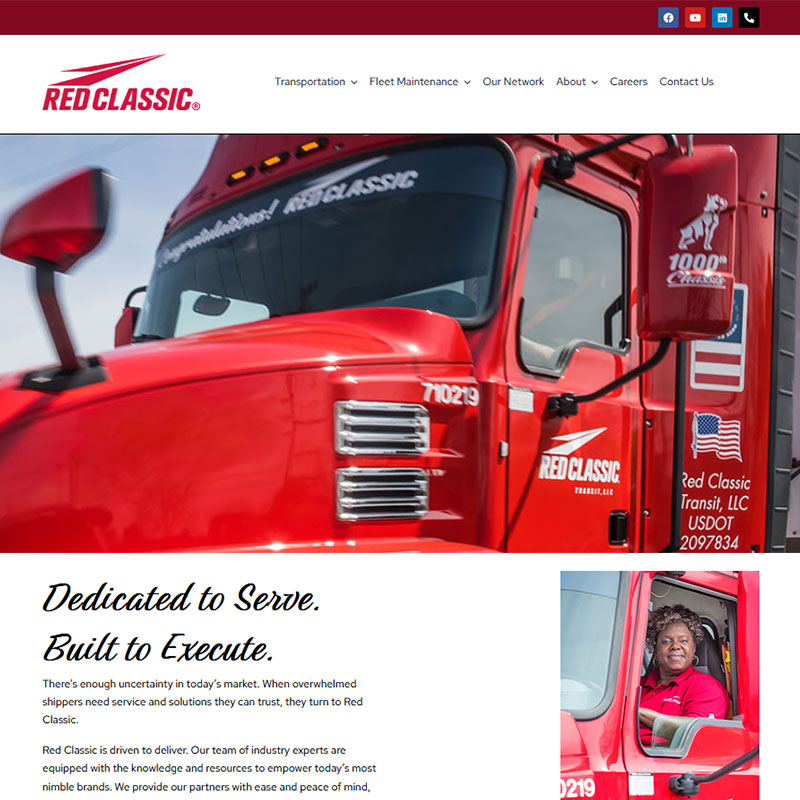
Web design and development for Red Classic, delivering a clean, branded digital presence that communicates the company's identity and services with clarity and impact.
- Client Red Classic
- Role Lead UI/UX Designer
- Category Web Development, Web Design, Branding
-
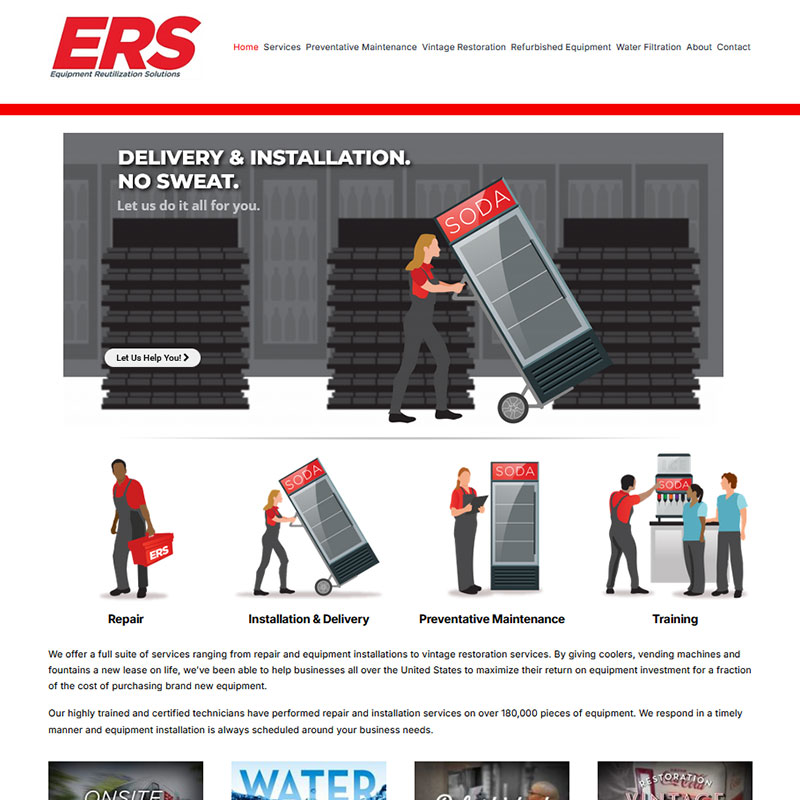
Websites, Branding ERS Company Website
Project Info
ERS Company Website
Web design and development for ERS, creating a cohesive and professional digital presence that reflects the company's brand identity and communicates its core offerings effectively.
- Client ERS
- Role Lead UI/UX Designer
- Category Web Development, Web Design, Branding
-
Branding Coca-Cola Consolidated IT Logo
Project Info
Coca-Cola Consolidated IT Logo
Brand identity design for the Coca-Cola Consolidated Information Technology division, creating a mark that works cohesively within the broader enterprise brand family.
- Client Coca-Cola Consolidated
- Role Lead UI/UX Designer
- Category Branding, Logo Design
-
Branding Coca-Cola Consolidated AI Hub Logo
Project Info
Coca-Cola Consolidated AI Hub Logo
Logo and brand identity design for the Coca-Cola Consolidated Artificial Intelligence Hub, establishing a forward-looking visual identity for the organization's emerging AI initiatives.
- Client Coca-Cola Consolidated
- Role Lead UI/UX Designer
- Category Branding, Logo Design
-
Branding Coca-Cola Consolidated Women's Forum Logo

Project Info
Coca-Cola Consolidated Women's Forum Logo
Brand identity for the Coca-Cola Consolidated Women's Forum, creating a mark that reflects the group's mission and values while remaining consistent with the enterprise brand family.
- Client Coca-Cola Consolidated
- Role Lead UI/UX Designer
- Category Branding, Logo Design
-
Branding Coca-Cola Consolidated RPA Logo

Project Info
Coca-Cola Consolidated RPA Logo
Logo and brand identity for the Coca-Cola Consolidated Robotic Process Automation team, giving a technical department a distinctive and credible visual identity within the broader enterprise brand system.
- Client Coca-Cola Consolidated
- Role Lead UI/UX Designer
- Category Branding, Logo Design
-
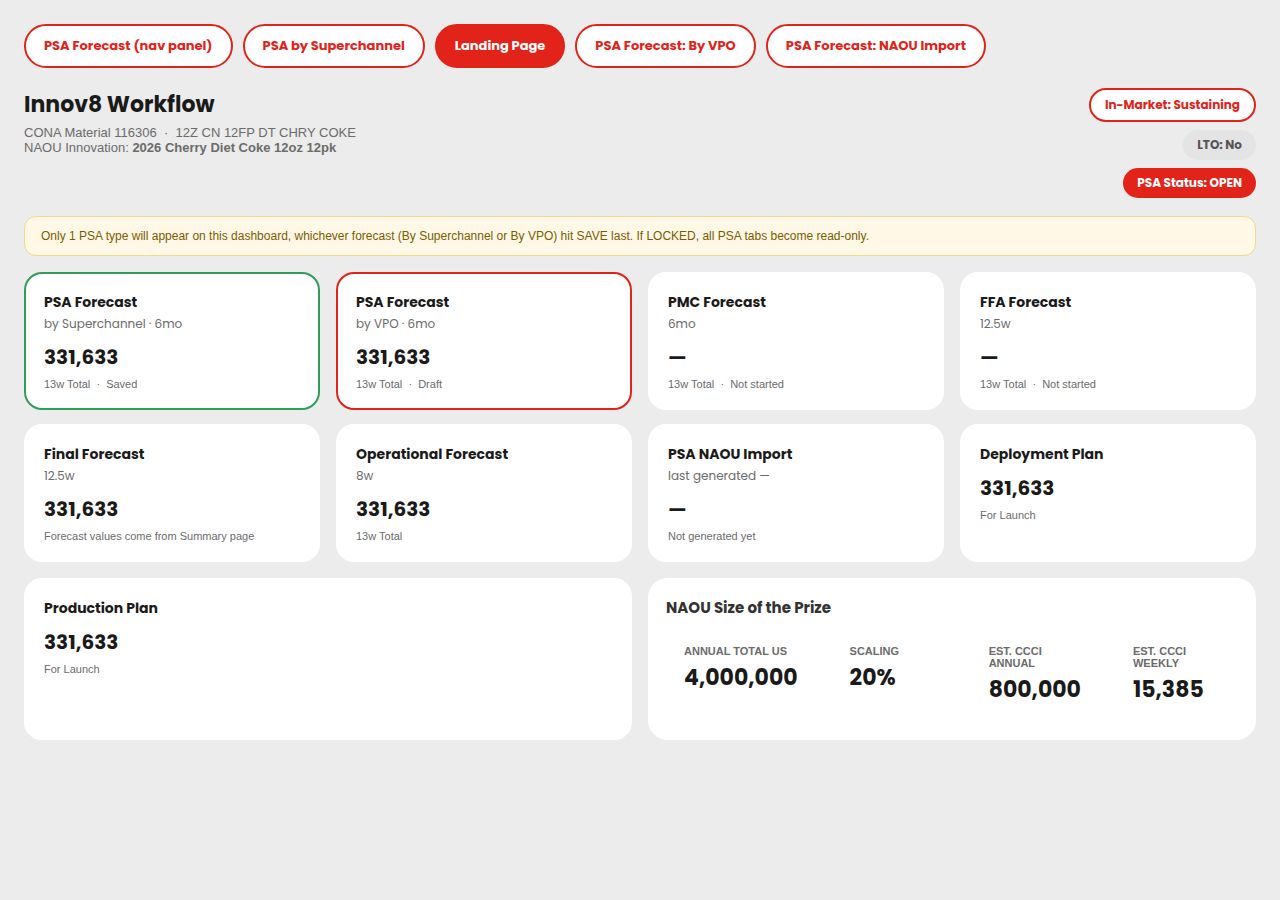
UI/UX Innov8 PSA Forecast
Project Info
Innov8 PSA Forecast
A forecasting tool built for products with no sales history yet, the gap left by tools designed around in-market SKUs. Covers the full workflow from the initial PSA entry by superchannel and by VPO through to the final NAOU import file.
- Origin Coca-Cola Consolidated
- Role UI/UX Designer
- Category UI/UX Design, Forecasting Tool


